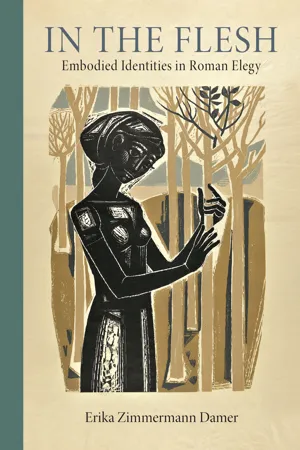
In the Flesh deeply engages postmodern and new materialist feminist thought in close readings of three significant poets—Propertius, Tibullus, and Ovid—writing in the early years of Rome's Augustan Principate. In their poems, they represent the flesh-and-blood body in both its integrity and vulnerability, as an index of social position along intersecting axes of sex, gender, status, and class. Erika Zimmermann Damer underscores the fluid, dynamic, and contingent nature of identities in Roman elegy, in response to a period of rapid legal, political, and social change.
Recognizing this power of material flesh to shape elegiac poetry, she asserts, grants figures at the margins of this poetic discourse—mistresses, rivals, enslaved characters, overlooked members of households—their own identities, even when they do not speak. She demonstrates how the three poets create a prominent aesthetic of corporeal abjection and imperfection, associating the body as much with blood, wounds, and corporeal disintegration as with elegance, refinement, and sensuality.
Recognizing this power of material flesh to shape elegiac poetry, she asserts, grants figures at the margins of this poetic discourse—mistresses, rivals, enslaved characters, overlooked members of households—their own identities, even when they do not speak. She demonstrates how the three poets create a prominent aesthetic of corporeal abjection and imperfection, associating the body as much with blood, wounds, and corporeal disintegration as with elegance, refinement, and sensuality.