Investment Theory and Risk Management
eBook - ePub

Investment Theory and Risk Management

  1. English
  2. ePUB (mobile friendly)
  3. Available on iOS & Android
eBook - ePub

Investment Theory and Risk Management

About this book

A unique perspective on applied investment theory and risk management from the Senior Risk Officer of a major pension fund

Investment Theory and Risk Management is a practical guide to today's investment environment. The book's sophisticated quantitative methods are examined by an author who uses these methods at the Virginia Retirement System and teaches them at the Virginia Commonwealth University. In addition to showing how investment performance can be evaluated, using Jensen's Alpha, Sharpe's Ratio, and DDM, he delves into four types of optimal portfolios (one that is fully invested, one with targeted returns, another with no short sales, and one with capped investment allocations).

In addition, the book provides valuable insights on risk, and topics such as anomalies, factor models, and active portfolio management. Other chapters focus on private equity, structured credit, optimal rebalancing, data problems, and Monte Carlo simulation.

  • Contains investment theory and risk management spreadsheet models based on the author's own real-world experience with stock, bonds, and alternative assets
  • Offers a down-to-earth guide that can be used on a daily basis for making common financial decisions with a new level of quantitative sophistication and rigor
  • Written by the Director of Research and Senior Risk Officer for the Virginia Retirement System and an Associate Professor at Virginia Commonwealth University's School of Business

Investment Theory and Risk Management empowers both the technical and non-technical reader with the essential knowledge necessary to understand and manage risks in any corporate or economic environment.

Frequently asked questions

Yes, you can cancel anytime from the Subscription tab in your account settings on the Perlego website. Your subscription will stay active until the end of your current billing period. Learn how to cancel your subscription.
No, books cannot be downloaded as external files, such as PDFs, for use outside of Perlego. However, you can download books within the Perlego app for offline reading on mobile or tablet. Learn more here.
Perlego offers two plans: Essential and Complete
  • Essential is ideal for learners and professionals who enjoy exploring a wide range of subjects. Access the Essential Library with 800,000+ trusted titles and best-sellers across business, personal growth, and the humanities. Includes unlimited reading time and Standard Read Aloud voice.
  • Complete: Perfect for advanced learners and researchers needing full, unrestricted access. Unlock 1.4M+ books across hundreds of subjects, including academic and specialized titles. The Complete Plan also includes advanced features like Premium Read Aloud and Research Assistant.
Both plans are available with monthly, semester, or annual billing cycles.
We are an online textbook subscription service, where you can get access to an entire online library for less than the price of a single book per month. With over 1 million books across 1000+ topics, we’ve got you covered! Learn more here.
Look out for the read-aloud symbol on your next book to see if you can listen to it. The read-aloud tool reads text aloud for you, highlighting the text as it is being read. You can pause it, speed it up and slow it down. Learn more here.
Yes! You can use the Perlego app on both iOS or Android devices to read anytime, anywhere — even offline. Perfect for commutes or when you’re on the go.
Please note we cannot support devices running on iOS 13 and Android 7 or earlier. Learn more about using the app.
Yes, you can access Investment Theory and Risk Management by Steven Peterson in PDF and/or ePUB format, as well as other popular books in Business & Investments & Securities. We have over one million books available in our catalogue for you to explore.

Information

Publisher
Wiley
Year
2012
Print ISBN
9781118129593
eBook ISBN
9781118238417
Chapter 1
Discount Rates and Returns
The most powerful force in the universe is compound interest.
—Albert Einstein

Estimating Returns

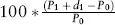
The total return on an investment in any security is the percentage change in the value of the asset including dividends over a specific interval of time. Assuming asset value is captured in the market price P and dividends by d, then the one period total return, r1, is equal to
img
percent, in which the subscripts index time. For simplicity, we will ignore dividends, which gives us the price return, which, in decimal form, is equal to
img
. Thus,
img
is the gross return (the return plus the initial one-dollar outlay in the security) on the investment for one period, and
img
is the net return; it is the return on a $1 investment. We can geometrically link returns to get the time equivalent of a longer-term investment. For example, suppose that the period under study is one month and that
img
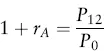
is therefore the one-month return. We can annualize this return by assuming the investment returns this amount in each month. Compounding this for one year is a product yielding the amount:
equation
Here,
img
is the monthly return, while
img
is the annualized equivalent. On the other hand, we may observe a time series of past monthly returns (called trailing returns), which we geometrically link to estimate an annualized figure, that is, the previous 12 monthly returns generate an annual return given by:
equation
We can similarly link quarterly returns to estimate an annual equivalent, for example,
img
, and we can do the same for weekly, daily, or any frequency for that matter, to achieve a lower frequency equivalent return. Focusing once again on monthly gross returns, annualization is a compounded return that is the product of monthly relative prices, each measuring price appreciation from the previous month, that is, by generalizing from the fact that if
img
, then the following must also be true:
equation
Upon canceling, this reduces to the following, which is consistent with our definition of gross return given earlier.
equation
This suggests that we can calculate the gross return over any period by taking the ratio of the market values and ignoring all intermediate market values. Similarly, we can solve for any intervening periodic average return by using the power rule; in this case, if the annual return is
img
, then the geometric average monthly return
img
must be
equation
For example, the average monthly return necessary to compound to a 15 percent annual return must be approximately 1.17 percent per month:
equation
Example 1.1
Quarterly returns to the Russell 3000 Domestic Equity Index for the years 2005 to 2007 are given in Table 1.1
Table 1.1 Russell 3000 Dom Eq Index
Date Return (%)
2005Q1 –2.20
2005Q2 2.24
2005Q3 4.01
2005Q4 2.04
2006Q1 5.31
2006Q2 –1.98
2006Q3 4.64
2006Q4 7.12
2007Q1 1.28
2007Q2 5.77
2007Q3 1.55
2007Q4 –3.34
a. Geometrically link these quarterly returns to generate annual returns.
b. Calculate the return for the three-year period.
c. What is the arithmetic average annual return for these three years?
d. What is the arithmetic average quarterly return over this three-year period?
Solutions
(Refer to Table 1.2)
Table 1.2 Geometric Returns
img
a. Annual Return (Column E) =
img
b. The return for the three-year period =
img
; annualized, this is
img
geometric average.
c. The arithmetic average annual return =
img
.
d. The arithmetic average quarterly return =
img
.
img
Go to the companion website for more details...

Table of contents

  1. Cover
  2. Series Page
  3. Title Page
  4. Copyright
  5. Dedication
  6. Preface
  7. Acknowledgments
  8. Chapter 1: Discount Rates and Returns
  9. Chapter 2: Fixed Income Securities
  10. Chapter 3: Term Structure
  11. Chapter 4: Equity
  12. Chapter 5: Portfolio Construction
  13. Chapter 6: Optimal Portfolios
  14. Chapter 7: Data and Applications
  15. Chapter 8: Anomalies
  16. Chapter 9: Factor Models
  17. Chapter 10: Active Portfolio Management
  18. Chapter 11: Risk
  19. Chapter 12: Monte Carlo Methods
  20. Chapter 13: Systemic Risk
  21. Chapter 14: Incorporating Subjective Views
  22. Chapter 15: Futures, Forwards, and Swaps
  23. Chapter 16: Introduction to Options
  24. Chapter 17: Models of Stock Price Dynamics
  25. Chapter 18: Hedging Portfolio Risk
  26. Chapter 19: Private Equity
  27. Chapter 20: Structured Credit
  28. Chapter 21: Optimal Rebalancing
  29. Chapter 22: Data Problems
  30. About the Author
  31. Index