- 200 pages
- English
- PDF
- Available on iOS & Android
eBook - PDF
About this book
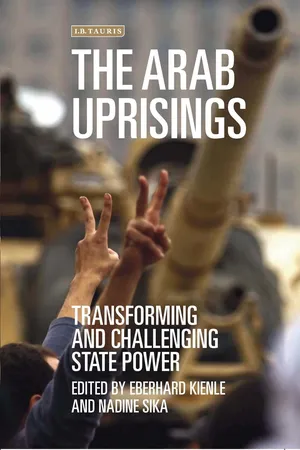
The uprisings which spread across the Middle East and North Africa in late 2010 and 2011 irrevocably altered the way in which the region is now perceived. But in spite of the numerous similarities in these protests, from Tunisia and Egypt to Yemen and Bahrain, their broader political effects display important differences. This book analyses these popular uprisings, as well as other forms of protest, and the impact they had on each state. Why were Mubarak and Bin Ali ousted relatively peacefully in Egypt and Tunisia, while Qadafi in Libya and Saleh in Yemen fought violent battles against their opponents? Why do political transformations differ in countries that were able to shed their autocratic presidents? And why have other regimes, including Morocco and Saudi Arabia, experienced only limited protests or managed to repress and circumvent them? Looking at the aftermath and transitional processes across the region, this book is a vital retrospective examination of the uprisings and how they can be understood in the light of state formation and governmental dynamics.
Trusted by 375,005 students
Access to over 1.5 million titles for a fair monthly price.
Study more efficiently using our study tools.
Information
Table of contents
- Front cover
- Author
- Endorsement
- Title
- Copyright
- Dedication
- Contents
- Contributors
- 1. Introduction
- 2. Comparing Incomparables: The Spring of Peoples and the Fall of States – 1848 and 2011
- 3. Revisiting the Political Economy of the Arab Uprisings: Algeria and Yemen Compared
- 4. What Difference Does Contestation Make? Agency and its Limits in the Arab Uprisings
- 5. The Gulf Monarchies: State-building, Legitimacy and Social Order
- 6. The Resilience of Arab Monarchies and the ‘Arab Spring’: A Comparative Approach
- 7. Popular Contestation, Regime Transformation and State Formation
- 8. Arab States, Regime Change and Social Contestation Compared: The Cases of Egypt and Syria
- Index
- Back cover
Frequently asked questions
Yes, you can cancel anytime from the Subscription tab in your account settings on the Perlego website. Your subscription will stay active until the end of your current billing period. Learn how to cancel your subscription
No, books cannot be downloaded as external files, such as PDFs, for use outside of Perlego. However, you can download books within the Perlego app for offline reading on mobile or tablet. Learn how to download books offline
We are an online textbook subscription service, where you can get access to an entire online library for less than the price of a single book per month. With over 1.5 million books across 990+ topics, we’ve got you covered! Learn about our mission
Look out for the read-aloud symbol on your next book to see if you can listen to it. The read-aloud tool reads text aloud for you, highlighting the text as it is being read. You can pause it, speed it up and slow it down. Learn more about Read Aloud
Yes! You can use the Perlego app on both iOS and Android devices to read anytime, anywhere — even offline. Perfect for commutes or when you’re on the go.
Please note we cannot support devices running on iOS 13 and Android 7 or earlier. Learn more about using the app
Please note we cannot support devices running on iOS 13 and Android 7 or earlier. Learn more about using the app
Yes, you can access The Arab Uprisings by Eberhard Kienle,Nadine Sika in PDF and/or ePUB format, as well as other popular books in Politics & International Relations & Political Campaigns & Elections. We have over 1.5 million books available in our catalogue for you to explore.